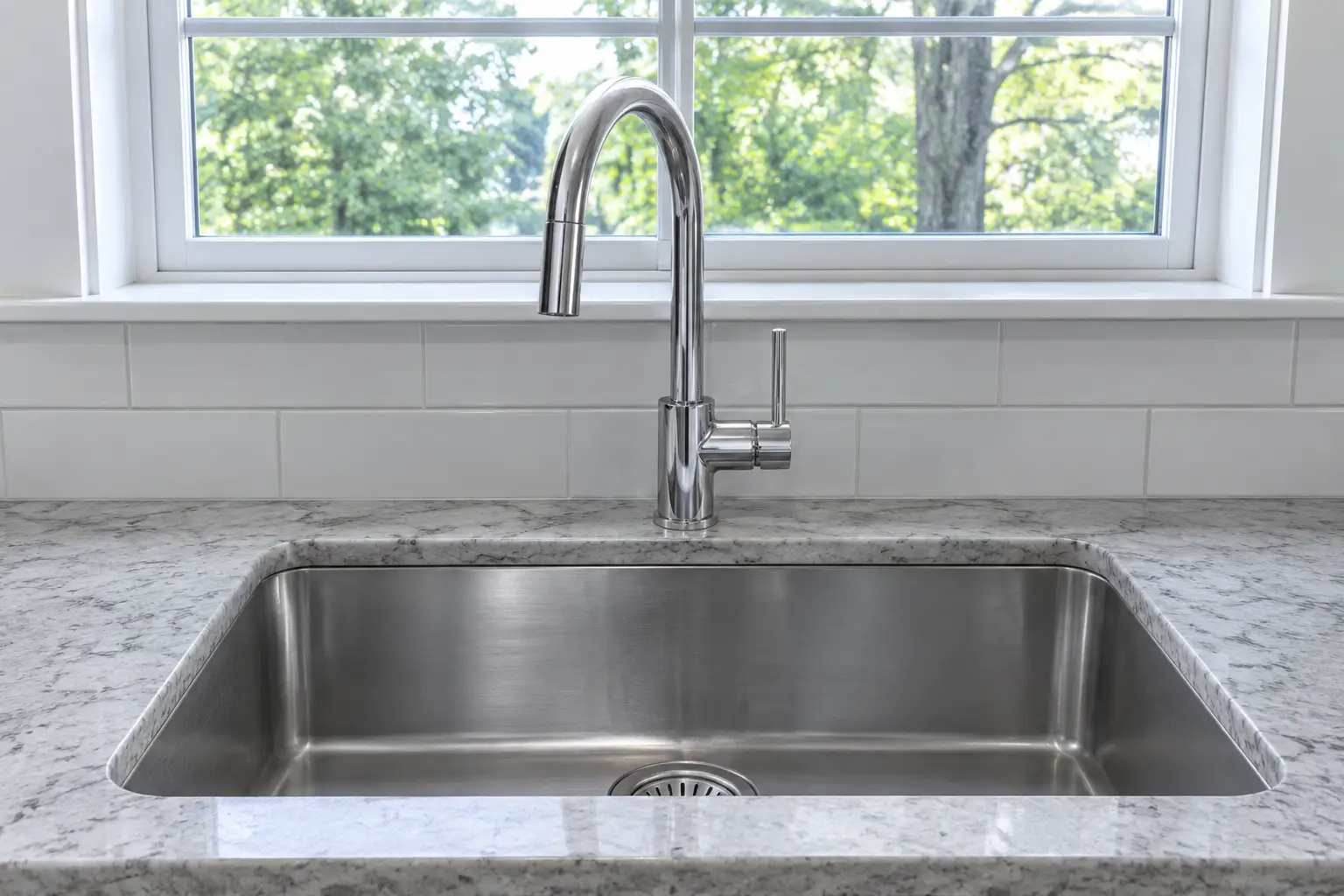
A drip is a worn part, not a mystery
Cartridges, washers and O rings wear out
Faucet repair in Prescott Valley usually comes down to a small part inside the faucet. Every time you turn a handle, that part moves against a seal. Over the years the seal wears and the faucet starts to drip.
Most modern faucets use a cartridge. Older two handle faucets use rubber washers. Either way, the fix is usually replacing the worn part rather than the whole faucet.
Why it is worth fixing early
A drip is easy to ignore, but it wastes water every hour and the constant flow can wear the valve seat. Fixing it early keeps it a small repair. Close the two valves under the sink first, and put a towel in the sink so small parts cannot fall down the drain.
Find your faucet problem
Drips from the spout
A worn cartridge or washer inside the handle.
Leaks around the handle
A worn O ring or a loose packing nut.
Low flow at one faucet
A clogged aerator at the tip of the spout.
Sprayer weak or leaking
A worn hose or diverter on kitchen faucets.
Handle hard to turn
Mineral build up or a worn cartridge.
Water under the sink
A supply line, a drain connection or the faucet base.
Low flow? Check the aerator first
If one faucet suddenly runs weakly while the others are fine, the aerator is the usual suspect. It is the small screen at the tip of the spout, and grit and minerals collect there.
Close the drain
Put the stopper in or lay a towel in the sink.
Unscrew the aerator
Turn it by hand, or wrap it in a cloth and use pliers gently.
Rinse and soak
Rinse out the grit and soak the screen in vinegar for an hour if it is crusted.
Put it back
Screw it on hand tight and run the water.
If every faucet in the house is weak, the cause is elsewhere, such as a partly closed main valve, a pressure regulator or a leak. That is worth a call.
Under the sink, every connection matters
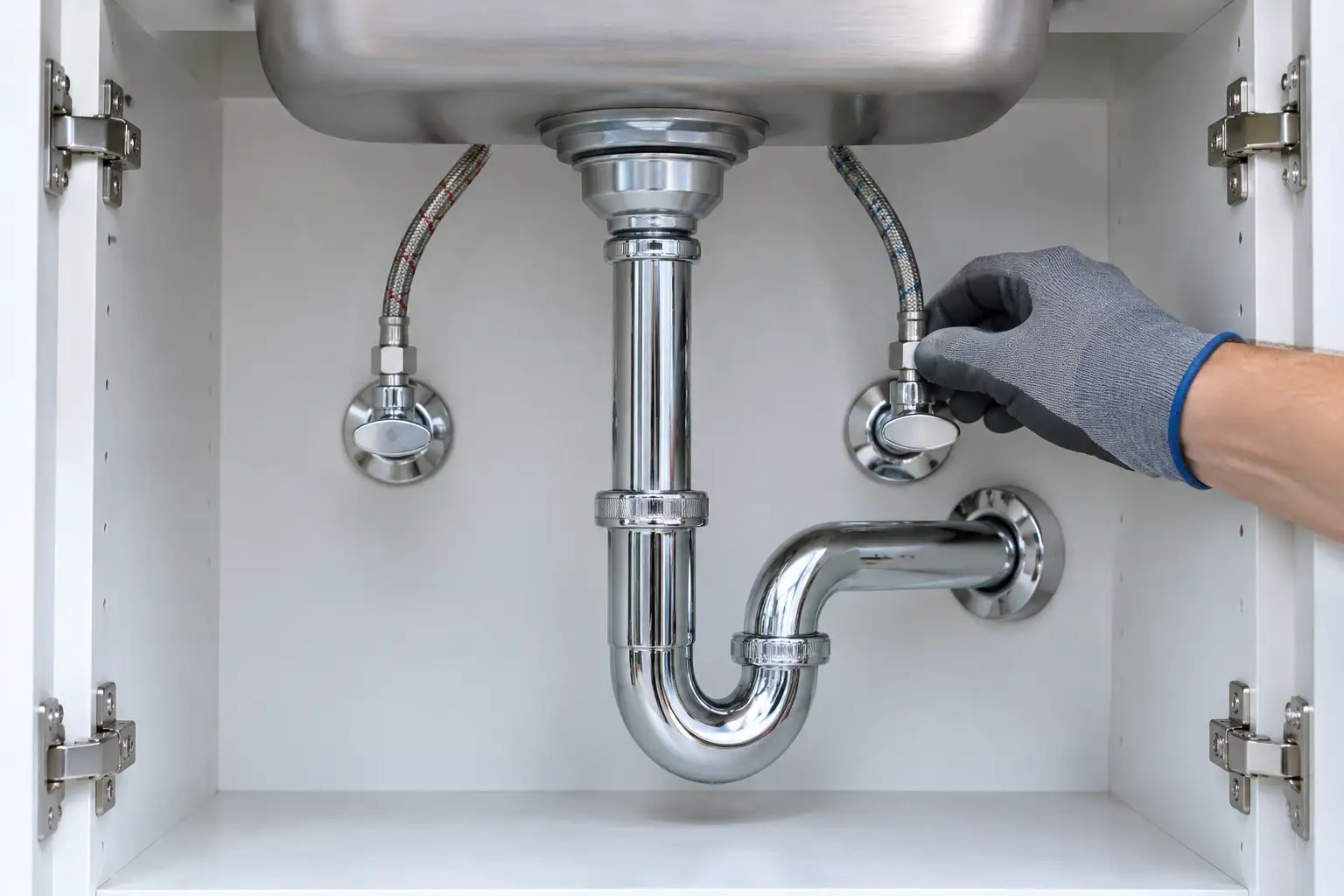
Cabinet leaks are often slow and easy to miss until the cabinet floor swells or a musty smell appears. Empty the cabinet, dry everything, run water and look for the first drop with a flashlight.
| Where the drip starts | Usual cause |
|---|---|
| Supply lines to the faucet | A loose nut or a worn braided line |
| Shutoff valves | A worn valve stem, often on older valves |
| The drain trap | A loose slip nut or a worn washer |
| The sink strainer | Failed putty around the drain basket |
| The faucet base | A worn seal under the faucet body |
Braided supply lines do not last forever. If yours look rusty or bulged, ask about replacing them, even if they are not leaking yet.
Repair the faucet or replace it
A repair usually works when
- The faucet is a known brand with parts available.
- Only one part is worn.
- The body and finish are in good shape.
Replacing is worth a thought when
- Parts are hard to find for an older faucet.
- The body is corroded or cracked.
- You have wanted a different style anyway.
You will hear whether a cartridge, a washer or a whole new faucet is the sensible fix, and the work waits for your go ahead.
Bathroom sinks and their own quirks
Bathroom sinks add a pop up drain and an overflow hole. A pop up stopper that will not stay up or down usually needs a small adjustment under the sink. A smell from the overflow can be cleared with a bottle brush and hot water.
A bathroom sink that drains slowly is almost always hair and soap on the stopper. Lift the stopper out, clean it and the drain usually runs freely again.
Outdoor faucets and cold snaps
Frozen pipes in cold snaps are a common trigger for calls in Prescott Valley, and outdoor faucets are often the first to go. A hose left attached traps water in the faucet, and when it freezes it can split the pipe inside the wall.
- Disconnect hoses before a hard freeze.
- Fit a foam cover over each outdoor faucet.
- If the house has an inside shutoff for outdoor faucets, close it for the winter and open the outside faucet to drain it.
- In spring, turn the faucet on and check the wall inside for drips.
Keep faucets and sinks trouble free
- Turn handles gently, never force them closed.
- Clean aerators every few months.
- Check under sinks for drips when you take out the trash.
- Make sure the shutoff valves turn, and replace stuck ones.
- Replace rusty or bulging supply lines before they fail.
Faucet and sink questions
What makes a faucet drip after it is turned off?
A worn cartridge or washer inside the faucet. Replacing that part usually stops the drip.
Can I fix a dripping faucet myself?
Many people do, if they know the brand and can get the right cartridge. Close the valves under the sink first and keep small parts out of the drain.
Why is my water pressure low at one faucet?
Usually a clogged aerator. Unscrew it, rinse the screen and soak it if it is crusted.
Why is the cabinet under my sink wet?
A supply line, a shutoff valve, the drain trap or the faucet base can all leak. Dry everything and watch for the first drop.
How often should supply lines be replaced?
There is no fixed rule, but rusty, bulging or very old lines are worth replacing before they fail.
Do I need to turn off the main to fix a faucet?
Usually not. The valves under the sink stop water to that faucet. If they will not close, use the main.
What if my shutoff valve leaks when I turn it?
Older valves often drip at the stem when moved. Close the main and have the valve replaced.
Why does my outdoor faucet leak inside the wall?
Often because it froze and split while a hose was attached. The leak may only show when the faucet is turned on, so check inside after first use in spring.
Why does my kitchen faucet spray sideways?
A partly clogged or loose aerator. Unscrew it, clean the screen and screw it back on straight.
Can a dripping faucet raise my water bill?
Yes. A steady drip runs all day and night, and over a month that adds up to a surprising amount of water.
More kitchen and bathroom repairs
We take faucet repair calls from homes across Prescott Valley, in the 86314 and 86315 ZIP codes.